

The Day AI Stopped Being Science Fiction
A few years ago, artificial intelligence felt like something reserved for tech giants and futuristic movies.
AI was something you heard about in Silicon Valley. It lived inside self-driving cars, research labs, or billion-dollar companies like Google and Amazon.
But something changed.
Quietly, without most people noticing, AI tools began entering everyday life.
Your email inbox started filtering spam automatically.
Netflix began recommending shows with surprising accuracy.
Banks started detecting fraud in real time.
Businesses began predicting customer behavior before customers even made decisions.
And then came the explosion of generative AI tools — platforms that could write articles, generate images, summarize documents, and even create code in seconds.
Suddenly, artificial intelligence software was no longer a distant innovation. It became a daily utility.
But here’s the problem:
Most people use AI tools without understanding what types of AI systems actually exist — or how these technologies are applied in real-world industries.
They see the surface.
They don’t see the structure underneath.
And that’s what we’re going to uncover.
In this guide, you’ll learn:
- The major types of AI tools
- How they’re categorized
- Where they are used in real life
- How businesses and industries rely on them
- And the limitations most people ignore
Because once you understand the categories of AI tools, you stop seeing artificial intelligence as a buzzword — and start seeing it as an ecosystem.
The Core Components Behind Most AI Tools
To understand different types of AI tools, you need to understand what powers them.
Here’s a simple breakdown:
| Component | What It Does | Example |
| Data | The information the AI learns from | Customer behavior data |
| Algorithm | The mathematical logic used to find patterns | Regression models |
| Model | The trained system that makes predictions | Fraud detection system |
| Interface | The user-facing tool | Chatbot, dashboard, app |
This structure exists whether you’re using:
- A machine learning analytics platform
- A natural language processing tool
- A computer vision application
- Or a generative AI model
Different categories of AI tools use different techniques — but most share this foundation.
Why Understanding AI Tool Types Matters
Here’s where most beginners get confused.
They think all AI tools are the same.
But they’re not.
A predictive analytics platform is completely different from an AI content generator.
A facial recognition system operates differently than a customer support chatbot.
If you understand the types of artificial intelligence tools, you can:
- Choose the right AI solution for business needs
- Understand career paths in AI
- Evaluate risks properly
- Avoid falling for marketing hype
And more importantly —
You start seeing real-world AI applications everywhere.
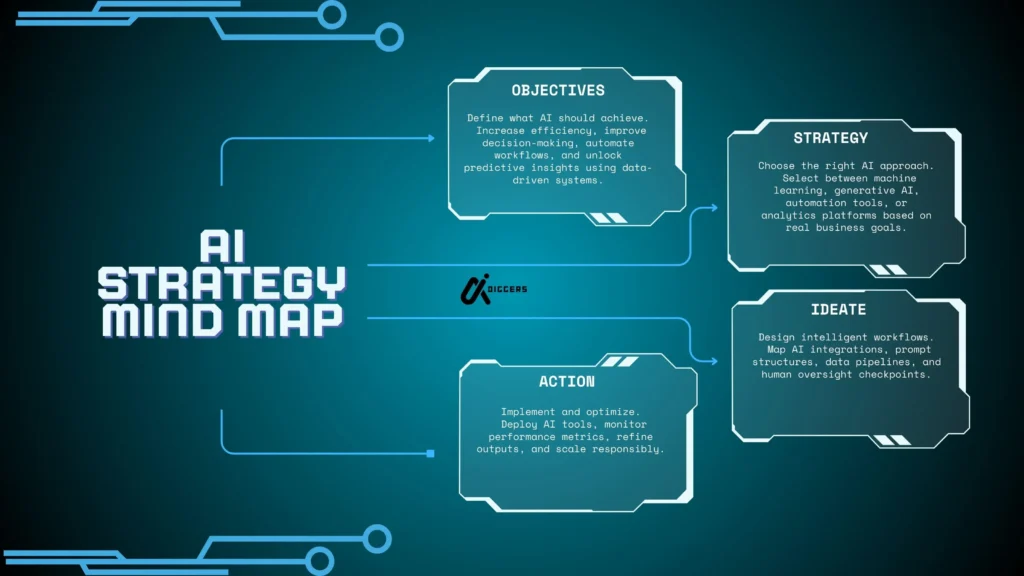
The 6 Core Types of AI Tools (Explained Simply)
If you strip away the hype, the marketing, and the headlines, most artificial intelligence tools fall into a few major categories.
They may look different on the surface.
But underneath, they usually belong to one of these six core types.
Think of these as the main branches of the AI ecosystem.
Here’s a simple overview before we break them down one by one:
| Type of AI Tool | What It Focuses On | Real-World Example |
| Machine Learning Tools | Making predictions from data | Sales forecasting software |
| Natural Language Processing (NLP) Tools | Understanding human language | Chatbots, translation apps |
| Computer Vision Tools | Analyzing images and video | Facial recognition systems |
| Generative AI Tools | Creating new content | AI writing & image tools |
| AI Automation Tools | Automating tasks and workflows | Smart CRM systems |
| Robotics & Intelligent Systems | Acting in physical environments | Warehouse robots |
Each type serves a different purpose.
Each solves a different problem.
And most modern AI-powered platforms actually combine multiple types together.
Let’s explore them properly.
1. Machine Learning Tools — The Prediction Engines
If AI had a backbone, it would be machine learning.
Machine learning tools are designed to find patterns in data and make predictions.
They don’t just follow instructions — they learn from examples.
Imagine a bank trying to detect fraudulent transactions.
Instead of manually reviewing every payment, the system analyzes millions of past transactions and learns:
- What normal behavior looks like
- What suspicious activity looks like
- Which patterns typically lead to fraud
Over time, it improves its accuracy.
That’s predictive AI in action.
Common Real-World Applications of Machine Learning Tools:
- Fraud detection in banking
- Product recommendation engines (like Netflix or Amazon)
- Sales and demand forecasting
- Credit scoring systems
- Risk analysis in insurance
These AI systems don’t “understand” in a human sense.
They calculate probabilities.
And in many industries, that’s incredibly powerful.
2. Natural Language Processing (NLP) Tools — AI That Understands Language
This is where most people first experience AI.
Natural Language Processing tools allow machines to understand, interpret, and generate human language.
When you:
- Use a chatbot
- Ask a virtual assistant a question
- Translate text
- Summarize a document
- Perform sentiment analysis on reviews
You’re using NLP-based AI tools.
Behind the scenes, these systems analyze:
- Grammar
- Context
- Word relationships
- Patterns in billions of sentences
Modern NLP models are trained on massive datasets — which is why they can respond conversationally.
Real-World Applications of NLP Tools:
- Customer support automation
- AI writing assistants
- Voice assistants
- Email filtering systems
- Legal document analysis
And this category is expanding rapidly as generative AI becomes more advanced.
3. Computer Vision Tools — AI That Sees and Interprets Images
If machine learning predicts
and NLP understands language
Computer vision allows AI to see.
Not like humans — but through pattern recognition inside pixels.
Every image is just data.
Millions of tiny numerical values representing light and color.
Computer vision AI tools analyze those patterns and learn to identify:
- Faces
- Objects
- Movements
- Text inside images
- Medical abnormalities
- Defects in manufacturing
And once trained, these systems can process thousands of images per second — far beyond human capacity.
Where Computer Vision Is Used in Real Life
| Industry | Real-World AI Application |
| Healthcare | Detecting tumors in MRI scans |
| Retail | Automated checkout systems |
| Security | Facial recognition systems |
| Automotive | Self-driving vehicle sensors |
| Manufacturing | Quality control defect detection |
When you unlock your phone using Face ID, you’re interacting with a computer vision tool.
When a factory automatically rejects a defective product, that’s AI-powered image recognition.
This type of artificial intelligence software is already deeply embedded in infrastructure — even if most people don’t notice it.
4. Generative AI Tools — AI That Creates
This is the category that exploded into mainstream awareness.
Generative AI tools don’t just analyze.
They create.
They generate:
- Articles
- Images
- Code
- Music
- Videos
- Marketing copy
- Product descriptions
These tools are powered by large AI models trained on enormous datasets.
Instead of predicting “yes or no,” they predict the next best word, pixel, or data point — based on patterns learned from millions of examples.
That’s how AI content creation tools work.
They don’t think.
They calculate probabilities at scale.
Real-World Applications of Generative AI
- Content marketing
- Graphic design support
- Code generation for developers
- Educational content creation
- Product mockups
- Script writing
This category includes many modern AI platforms that businesses are rapidly adopting.
But it also raises serious concerns about misinformation, copyright, and over-automation — which we’ll discuss later.
5. AI Automation Tools — The Silent Workforce
Not all artificial intelligence tools are flashy.
Some don’t write content.
Some don’t generate images.
Some don’t analyze medical scans.
Instead, they quietly automate decisions and workflows in the background.
AI automation tools are designed to reduce repetitive human tasks by combining:
- Machine learning
- Rule-based logic
- Data analysis
- Predictive modeling
Think about a modern CRM system.
When a customer fills out a form, the system can automatically:
- Score the lead
- Assign it to the right sales representative
- Trigger follow-up emails
- Predict conversion probability
No manual sorting.
No human review.
Just AI-driven workflow automation.
Real-World Applications of AI Automation Tools
- Customer support ticket routing
- Email marketing personalization
- HR resume screening
- Inventory management
- Smart logistics optimization
- Dynamic pricing systems
These AI-powered platforms don’t always get attention.
But in business environments, they save thousands of hours.
And time is money.
This category of AI technology is often what drives operational efficiency in companies.
6. Robotics & Intelligent Systems — AI That Acts in the Physical World
So far, most AI tools we’ve discussed operate in digital environments.
But robotics takes artificial intelligence into the physical world.
Robotics and intelligent systems combine:
- Computer vision
- Machine learning
- Sensors
- Real-time decision systems
These AI systems can perceive their surroundings and take action.
Not just analyze.
Act.
Real-World Applications of AI Robotics
| Industry | Example of AI Robotics |
| Warehousing | Autonomous sorting robots |
| Manufacturing | AI-powered assembly robots |
| Agriculture | Smart harvesting machines |
| Healthcare | Robotic-assisted surgery |
| Transportation | Self-driving vehicle systems |
Warehouse robots can move products more efficiently than humans.
Surgical robots assist doctors with precision beyond human steadiness.
Autonomous vehicles use AI to interpret traffic signs, detect obstacles, and make split-second driving decisions.
This is where artificial intelligence stops being just software — and becomes an intelligent system interacting with the real world.
A Quick Recap of All 6 Types
Let’s simplify everything:
| Type | Core Function |
| Machine Learning | Predict outcomes from data |
| NLP | Understand and generate language |
| Computer Vision | Interpret images and video |
| Generative AI | Create new content |
| AI Automation | Optimize workflows and decisions |
| Robotics | Perform actions in physical environments |
Most advanced AI solutions today combine multiple categories.
For example:
A self-driving car uses computer vision + machine learning + automation + robotics.
A smart customer service platform uses NLP + automation + predictive analytics.
AI is not one tool.
It’s an interconnected system of technologies.
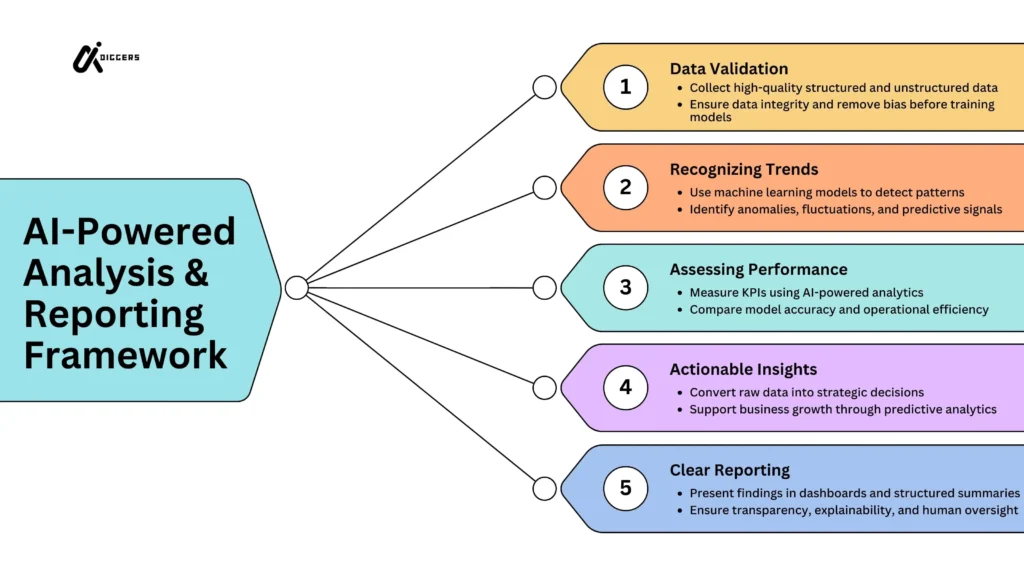
How These AI Tools Power Real Businesses Across Industries
It’s easy to talk about artificial intelligence in theory.
It’s harder — and more important — to understand where AI tools actually generate economic value.
Because behind the headlines, AI adoption isn’t happening just for innovation.
It’s happening for efficiency, prediction, personalization, and competitive advantage.
Let’s look at how different industries combine various types of AI tools to solve real problems.
1. Retail and E-Commerce: Predicting What You’ll Buy
When you open an online store and see “Recommended for You,” that’s not random.
It’s powered by:
- Machine learning algorithms
- Customer behavior data
- Predictive analytics models
Retailers use AI tools to:
- Forecast demand
- Optimize inventory
- Personalize product recommendations
- Detect fraudulent transactions
Generative AI tools are also being used to:
- Create product descriptions
- Generate ad copy
- Produce personalized marketing emails
AI in retail is no longer experimental. It’s infrastructure.
2. Healthcare: Supporting Life-Saving Decisions
Healthcare AI applications are among the most impactful — and sensitive.
Computer vision tools help analyze medical images like X-rays and MRIs.
Machine learning models predict disease risk.
Natural language processing tools extract insights from medical records.
AI systems assist in:
- Early cancer detection
- Drug discovery research
- Patient risk scoring
- Treatment recommendation systems
In many cases, AI doesn’t replace doctors.
It supports faster, more accurate decision-making.
3. Finance: Risk, Fraud, and Real-Time Decisions
Financial institutions were early adopters of AI technology.
Why?
Because finance runs on data.
AI tools in finance are used for:
- Fraud detection
- Credit scoring
- Algorithmic trading
- Risk modeling
- Customer sentiment analysis
Machine learning models can detect suspicious patterns across millions of transactions in seconds.
That scale simply isn’t possible manually.
4. Education: Personalized Learning at Scale
Education is quietly transforming through AI-powered platforms.
AI tools help:
- Personalize learning paths
- Adapt quizzes based on performance
- Automate grading
- Provide tutoring support
Generative AI applications are also being used to:
- Create study guides
- Summarize complex topics
- Assist with research
However, this also raises concerns about academic integrity — which we’ll explore in the risks section.
5. Manufacturing and Logistics: Operational Intelligence
Behind global supply chains are AI-driven automation systems.
Companies use AI to:
- Optimize delivery routes
- Predict equipment failure
- Manage warehouse robotics
- Reduce production defects
Computer vision tools inspect products for quality control.
Predictive maintenance systems reduce downtime by identifying issues before breakdowns occur.
This is AI applied to operational efficiency — not headlines.
A Pattern You Should Notice
Across industries, the structure is similar:
- Data is collected
- Machine learning models analyze it
- AI tools make predictions or automate actions
- Humans oversee and validate decisions
AI doesn’t work in isolation.
It works in systems.
And businesses that integrate artificial intelligence strategically — not blindly — tend to benefit most.
Trust requires explainability.
The Hidden Risks of AI Tools Most People Don’t Think About
There’s a pattern that happens with every powerful technology.
First comes excitement.
Then comes mass adoption.
Only later do we talk about consequences.
Artificial intelligence tools are currently in the excitement phase.
Businesses rush to implement AI-powered automation.
Students use generative AI for assignments.
Companies deploy predictive models across entire departments.
But very few pause to ask a harder question:
What happens when we rely on systems we don’t fully understand?
AI Learns From Us — Including Our Flaws
AI systems don’t invent bias.
They inherit it.
If a hiring algorithm is trained on 10 years of historical company data — and that data reflects biased decisions — the AI model may quietly continue the same patterns.
Not because it’s malicious.
Because it learned from reality.
Machine learning models reflect the data they are fed.
And real-world data is messy.
That’s why responsible AI development now includes fairness testing, bias audits, and model explainability research.
Without that layer of scrutiny, predictive AI tools can amplify problems instead of solving them.
The Automation Trap
AI automation tools are incredibly efficient.
They route tickets.
Score leads.
Approve transactions.
Flag suspicious behavior.
But efficiency can create dependency.
When decisions move from humans to algorithms, oversight can slowly decrease.
In finance or healthcare, that matters.
An AI system predicting credit risk may be statistically accurate — but what about edge cases?
An AI tool analyzing medical scans may detect patterns — but who verifies rare anomalies?
Artificial intelligence should assist human judgment, not replace it.
The most successful companies treat AI as augmentation — not substitution.
The Black Box Problem
Here’s something many people don’t realize:
Some advanced AI models cannot fully explain themselves.
Deep learning systems — especially neural networks — operate in complex layers of mathematical transformations.
They produce results with high accuracy.
But explaining why they produced that result can be difficult.
That lack of transparency creates tension in industries that require accountability.
If an AI denies someone a loan, there must be reasoning.
If an AI flags a patient as high-risk, doctors need interpretability.
Trust in AI tools depends not just on performance — but on explainability.
Data Is the Real Fuel — and the Real Risk
Artificial intelligence software runs on data.
Massive amounts of it.
Customer behavior.
Location patterns.
Purchase history.
Medical records.
Financial activity.
The more advanced the AI tool, the more data it typically requires.
And wherever large data ecosystems exist, privacy risks follow.
This is why AI governance, data security, and regulatory compliance are becoming central topics in artificial intelligence strategy.
AI is not just a technical challenge.
It’s an ethical one.
The Future of AI Tools and Real-World Applications
If you zoom out for a moment, something interesting becomes clear.
Artificial intelligence tools are no longer experimental.
They are becoming infrastructure.
Just like electricity.
Just like the internet.
Just like cloud computing.
The next phase of AI is not about “more tools.”
It’s about deeper integration.
From Standalone Tools to Embedded Intelligence
Right now, many people use AI tools separately.
An AI writing assistant here.
A predictive analytics dashboard there.
An automation workflow somewhere else.
But the future isn’t fragmented.
AI systems are slowly becoming embedded into everyday software.
Your CRM won’t “have AI features.”
It will simply be AI-native.
Your accounting software won’t offer “AI insights.”
It will automatically predict financial risks.
Artificial intelligence technology is moving from optional add-on to invisible engine.
That shift matters.
Because once AI becomes infrastructure, competitive advantage changes.
It’s no longer about “using AI.”
It’s about how intelligently you integrate it.
Smarter Models, Smaller Systems
Another major trend is efficiency.
Early AI systems required massive computing power.
Now, researchers are building smaller, optimized AI models that can:
- Run locally
- Use less energy
- Process data faster
- Maintain privacy
This means artificial intelligence tools will not only scale in enterprises —
they will expand into small businesses, schools, and personal devices.
AI adoption won’t just grow upward.
It will spread outward.
Human + AI Collaboration Will Define the Next Era
There’s a misconception that AI will replace everything.
More likely?
It will redefine roles.
Writers will use generative AI for drafting — but refine ideas strategically.
Doctors will use predictive models — but interpret outcomes with experience.
Businesses will use automation — but oversee risk management carefully.
The most successful future professionals won’t compete with AI.
They’ll collaborate with it.
That’s the real shift happening in artificial intelligence applications.
Frequently Asked Questions About AI Tools and Their Applications
What are the main types of AI tools?
The main types of AI tools include machine learning tools, natural language processing (NLP) systems, computer vision applications, generative AI platforms, AI automation software, and robotics-based intelligent systems.
Each category focuses on a different capability — predicting outcomes, understanding language, interpreting images, generating content, automating workflows, or acting in physical environments.
Most advanced AI solutions today combine multiple types into one integrated system.
What are some real-world applications of AI tools?
AI tools are widely used across industries.
In healthcare, they help detect diseases from medical scans.
In finance, they detect fraud and assess credit risk.
In retail, they power recommendation engines and demand forecasting.
In education, they personalize learning experiences.
In manufacturing, they optimize logistics and quality control.
Artificial intelligence is already embedded in everyday systems — from spam filters to self-driving technologies.
Are AI tools only for large companies?
No.
While large enterprises were early adopters, AI-powered tools are now accessible to startups, small businesses, and even individuals.
Cloud-based AI platforms and generative AI tools have lowered the barrier to entry. Today, a solo entrepreneur can use AI for marketing, automation, data analysis, and customer engagement without building complex systems from scratch.
What is the difference between machine learning and AI tools?
Machine learning is a subset of artificial intelligence.
AI is the broader concept of systems that mimic intelligent behavior.
Machine learning specifically refers to algorithms that learn from data to make predictions or decisions.
Many AI tools rely on machine learning models as their core engine.
Are AI tools safe to use?
AI tools can be safe when used responsibly.
However, risks include data privacy concerns, algorithmic bias, lack of transparency, and over-reliance on automation.
Organizations must combine AI implementation with proper governance, human oversight, and ethical standards to ensure safe and fair usage.
Will AI replace human jobs?
AI will likely transform jobs more than eliminate them entirely.
Automation may reduce repetitive tasks, but it also creates new opportunities in AI management, oversight, system design, and strategic roles.
Historically, technological revolutions shift labor markets rather than eliminate them completely.
The key is adaptation and skill evolution.
Final Takeaway: Understanding AI Beyond the Hype
Artificial intelligence is not one tool.
It is an ecosystem of technologies working together — predicting, understanding, creating, automating, and acting.
When you understand the different types of AI tools and their real-world applications, something changes.
You stop seeing AI as a trend.
You start seeing it as infrastructure.
The future won’t belong to those who fear artificial intelligence.
It will belong to those who understand how to use it intelligently.
And that understanding starts with clarity — not hype.
Refrence: Wikipedia , Google Scholar